
Services
Cloud & DevOps
Automated infrastructure, CI/CD pipelines and cost-optimised cloud, so you ship without fear and your systems stay up without heroics.

Quick answer
Cloud and DevOps at The Tech Thingy means automated infrastructure and CI/CD, plus audits of cost and reliability. It suits teams who want to ship often and keep systems up without a full-time ops hire. An audit is typically a few days and a full setup one to three weeks, with ongoing management as a monthly engagement.
Who this is for
Sound familiar?
- Teams scared to deploy because something always breaks
- Businesses whose cloud bill has quietly got out of hand
- Products that fall over under load at exactly the wrong moment
- Founders who need infrastructure set up right the first time
Is this the right fit?
We are a good fit if your team is nervous every time it deploys, if your cloud bill has grown without anyone deciding it should, or if your product struggles under load. We also help founders who want their infrastructure set up right the first time, without hiring a full-time ops person.
Most work starts with an audit, which is typically a few days. A full setup is typically one to three weeks, and ongoing management runs as a monthly engagement. Timelines depend on how quickly we get access to your current systems.
What’s included
Real deliverables, not a feature cloud.
- Infrastructure setup
- Cloud environments provisioned as code, repeatable and documented
- CI/CD pipelines
- Automated build, test and deploy, so shipping is boring and safe
- Monitoring & alerts
- You find out about problems before your customers do
- Cost optimisation
- A review that stops you paying for capacity you do not use
- Scaling & reliability
- Systems that hold up under load, with backups that actually restore
- Security basics
- Access, secrets and backups handled the way they should be
Question
How much does AWS cost in India?
AWS charges for what you use, so the bill depends on your servers, databases, storage and traffic. A small business website or app can run for a modest monthly amount; costs grow with traffic and with resources nobody switched off. Most surprise bills come from idle servers, oversized databases and forgotten test environments.
Question
Why is AWS so expensive?
Usually it is not AWS, it is the setup. Servers sized for peak traffic all day, no auto-scaling, storage that is never cleaned, and data transfer nobody is watching. A cost review often cuts the bill without changing anything the customer sees.
Not sure which way to go?
Tell us what you are building and we will tell you honestly what we would do. 15 minutes, no deck.
How we work
The actual process.
- 01
Audit what you have
We review your current setup, cost, reliability and how you deploy today, and tell you plainly where the risk and the waste are.
- 02
Infrastructure as code
We provision your environments as code, so they are repeatable, documented and not living in one person's memory or a console nobody dares touch.
- 03
Automate the pipeline
We set up CI/CD so build, test and deploy happen automatically. Shipping should be a non-event, not a Friday-afternoon gamble.
- 04
Monitor and harden
We add monitoring and alerts so you hear about problems first, and cover the security and backup basics that get skipped until they bite.
- 05
Optimise the cost
We right-size what you run and cut what you do not use. Cloud bills grow quietly, and a review usually pays for itself.
How a project runs
You talk to the people building your infrastructure, not an account manager. Before any work starts, the scope is written down along with the number against it, so you know exactly what you are getting.
While we build, you can watch the work on a live preview instead of waiting for a big reveal at the end. The aim is a working first version in weeks rather than quarters, which you then use and correct against.
Every engagement ends the same way: clean code, documentation, and every account in your name. You are never locked to us, and any competent team can pick up what we built.
Timelines
An audit is typically a few days; a full setup one to three weeks. Ongoing management is a monthly engagement. Timelines depend on access to your current systems.
How we price
No surprises.
Every engagement is scoped before it starts. You get a written scope, a fixed number against it, and a payment schedule tied to what we hand over. Nothing moves without you agreeing to it first.
Scoped in writing
You see the full scope and the number before any work begins
Paid on delivery
Milestone payments tied to what we hand over, not to a calendar
Changes quoted first
Anything outside the agreed scope is priced and approved before we build it
Most projects are decided in one call. Tell us what you are trying to build and we will come back with a scope and a number.
Get a scope and a price

Questions
Before you ask.
Which cloud do you work with?
Primarily AWS, with others where they fit. We will use what suits your stack and budget rather than pushing one provider.
Can you lower our cloud bill?
Usually, yes. Cloud spend grows quietly and most setups pay for capacity they do not use. An audit typically finds enough to cover itself.
We are scared to deploy. Can you fix that?
That is exactly what CI/CD is for. When build, test and deploy are automated, shipping stops being a gamble and becomes a non-event.
What if something goes down at 2am?
We set up monitoring and alerts so problems surface before your customers hit them, and we cover the backup and recovery basics that get skipped until they bite.
Do we need someone in-house too?
Not necessarily. We can set things up so your existing team can run them, or manage the infrastructure for you. Either way it is documented, not locked in our heads.
Can you take over a messy existing setup?
Yes. We start with an audit, tell you honestly what we find, and stabilise from there rather than forcing a rebuild you may not need.
What do you need from us to start an audit?
Access to your current cloud setup and a short walk-through of how you deploy today. From there we review cost, reliability and your deployment process, and tell you plainly where the risk and the waste are.
Proof
Work behind the words.
Marketplace Intelligence & E-Commerce
The Good Growth Company
A SaaS platform unifying Amazon, Myntra, Flipkart, Blinkit, Zepto and Ajio, with crawl engines and bulk campaign automation.

Client project
Laundry & Cleaning Services
Kleansweep
Seventy-one models covering orders, production, logistics, procurement, payroll and customer wallets.
Health & Parenting
Restful Baby Sleep
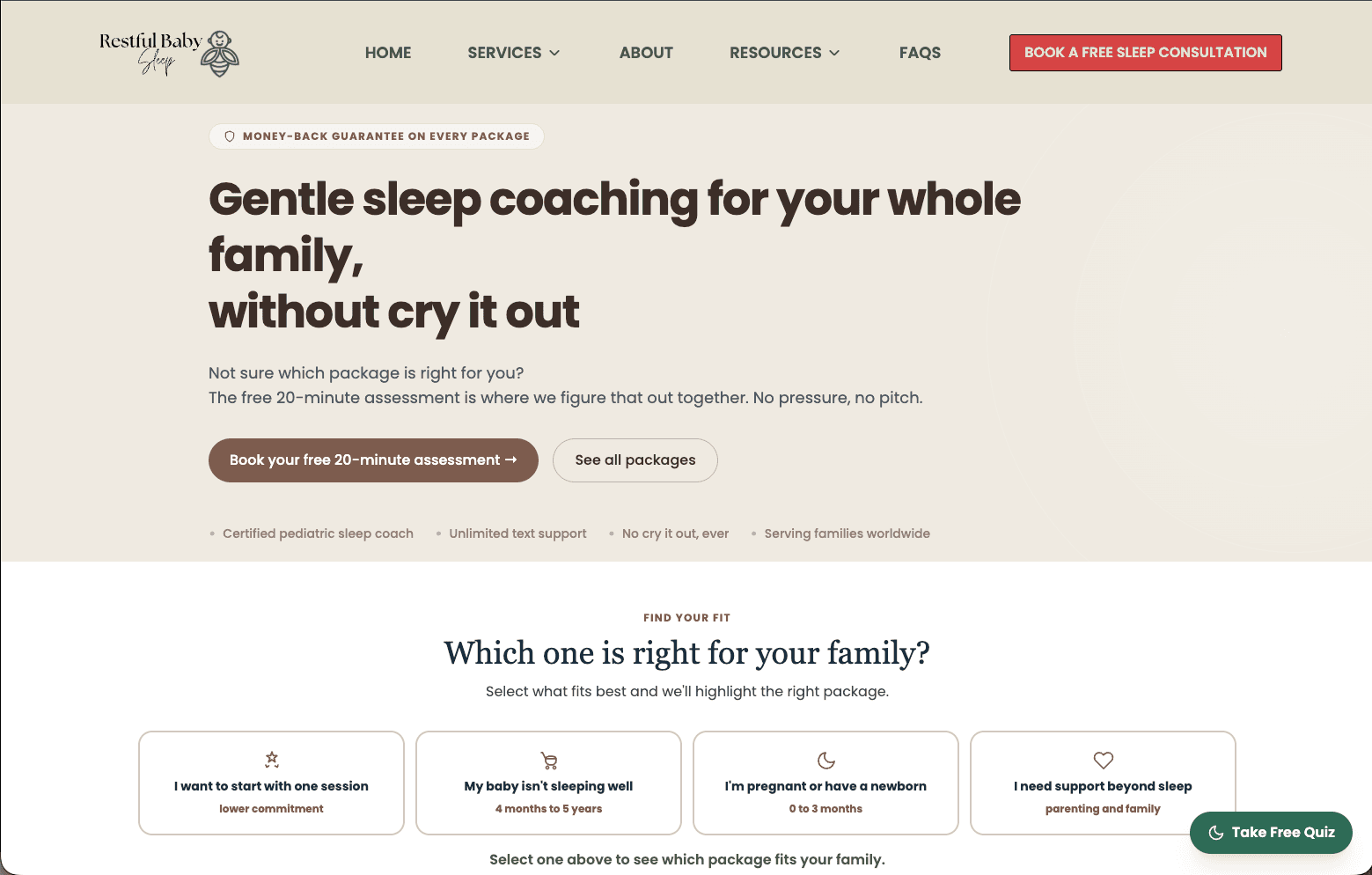
Three products for a parenting business, including an AI panel that fills an entire story record from an uploaded manuscript.
Questions people ask us
Straight answers
Is AWS free for 12 months?
Not for new accounts any more. Since July 2025, new AWS customers can choose a free plan that lasts up to six months, with up to US$200 in credits, and more than 30 services remain free within limits after that. Accounts created earlier were on the older 12-month free tier.
What happens if I don't pay AWS?
AWS will remind you, then suspend and eventually close the account, which can take your website or app offline and delete data. Set billing alerts from day one.
Who is cheaper, AWS or Azure?
For most small workloads the difference is smaller than the difference a good setup makes. Choose the platform your team knows, then optimise it.
Still have a question? Ask us on a 15-minute call.
Keep reading
Where to go next.
Start a conversation
Tell us what you’re building.
A real conversation about your business and whether we’re the right team to help. Free, and no obligation either way.
Reach us directly
- Call
- +91 859-141-8661
- Studio
- Thane, Mumbai Metropolitan Region
- Response time
- Within a few hours, working days