
Services
Custom software development
Custom systems, internal tools and product platforms built around how your business actually works, replacing the spreadsheets and manual steps that no longer hold.
Quick answer
Software development at The Tech Thingy means custom systems and internal tools, from an admin panel to a full platform. It suits businesses that have outgrown spreadsheets and need software their team can trust. A focused internal tool is typically three to six weeks to a usable first version, with platforms phased over longer.
Who this is for
Sound familiar?
- Operations running on spreadsheets and WhatsApp that keep breaking
- Businesses that need an admin panel or internal tool built to fit
- Founders with a product idea that needs engineering, not a no-code patch
- Teams whose off-the-shelf software almost fits, but not quite
Is this the right fit?
We are a good fit if your operations run on spreadsheets and WhatsApp that keep breaking, or if your team needs an admin panel or internal tool built to fit how you actually work. We also work with founders whose product idea needs real engineering rather than a no-code patch, and teams whose off-the-shelf software almost fits, but not quite.
A focused internal tool is typically three to six weeks to a usable first version, counted from spec sign-off. A larger platform is phased over longer, with the most important workflow built first so your team can use it early.
What’s included
Real deliverables, not a feature cloud.
- Discovery & spec
- We map the real workflow and write down exactly what gets built
- Data model
- A schema that reflects your business, so reporting is possible later
- Admin panel
- The internal tool your team runs the operation from
- APIs & integrations
- Connections to the tools, payments and services you already use
- Roles & access
- The right people see the right things, with an audit trail
- Reporting
- The numbers you actually need, not a wall of vanity charts
- Handover
- Documentation, clean code, and every account in your name
Question
What is a CRM, in simple terms?
A CRM is one place where every customer enquiry, call, follow-up and sale is recorded, so nothing depends on one person's memory or one WhatsApp chat. If your team asks "did anyone call this person back?", you need one. Our own CRM for real estate builders, TRET, started exactly that way.
Question
Is Excel a CRM?
Excel can work as a basic list of customers, and many businesses start there. It stops working when several people edit it at once, when you need reminders and follow-ups, or when you need to know who said what and when. That is usually the moment to move to a proper CRM, off the shelf or custom built.
Not sure which way to go?
Tell us what you are building and we will tell you honestly what we would do. 15 minutes, no deck.
How we work
The actual process.
- 01
Map the real workflow
We sit with how the work actually happens today, the spreadsheets, the WhatsApp messages, the manual steps, and write down what the system has to do. This is where most custom software goes wrong, so we spend real time here.
- 02
Model the data
We design the data model around your business, not a generic template. Get this right and reporting is easy later; get it wrong and nothing downstream works.
- 03
Build the core first
We build the one workflow that matters most and get it into your team's hands early, so we are correcting against real use, not assumptions.
- 04
Integrate and expand
We connect the tools, payments and services you already run on, then add the remaining modules against a plan you can see.
- 05
Harden and hand over
We add roles, access and an audit trail, document the system, and hand over with every account in your name.
How a project runs
You talk to the people building your software, not an account manager. Before any work starts, the scope is written down along with the number against it, so you know exactly what you are getting.
While we build, you can watch the work on a live preview instead of waiting for a big reveal at the end. The aim is a working first version in weeks rather than quarters, which you then use and correct against.
Every engagement ends the same way: clean code, documentation, and every account in your name. You are never locked to us, and any competent team can pick up what we built.
Timelines
A focused internal tool is typically three to six weeks to a usable first version; a platform is phased over longer. Timelines run from spec sign-off.
How we price
No surprises.
Every engagement is scoped before it starts. You get a written scope, a fixed number against it, and a payment schedule tied to what we hand over. Nothing moves without you agreeing to it first.
Scoped in writing
You see the full scope and the number before any work begins
Paid on delivery
Milestone payments tied to what we hand over, not to a calendar
Changes quoted first
Anything outside the agreed scope is priced and approved before we build it
Most projects are decided in one call. Tell us what you are trying to build and we will come back with a scope and a number.
Get a scope and a price
Questions
Before you ask.
Why not just use off-the-shelf software?
If it fits, use it, and we will tell you so. Custom software earns its cost when the off-the-shelf option forces your business to work its way instead of yours.
Is this the same as a no-code tool?
No. No-code is great until you hit its ceiling, then you are stuck. We build software you own and can extend, though we will happily use no-code where it genuinely fits.
Can you work with our existing systems?
Yes. Most builds connect to tools, payments and services you already run on. Integration is part of the job, not an afterthought.
How do we not end up with something nobody uses?
We build the core workflow first and put it in your team's hands early, so we are correcting against real use. Software that ships in one big reveal is software that misses.
Who owns the code?
You do, along with every account. It is documented and handed over so any competent engineer can maintain it.
Can you take over a half-finished project?
Often yes. We will review what exists and be honest about whether it is worth continuing or restarting.
Do we need a written spec before we talk to you?
No. Mapping the real workflow and writing down what gets built is the first step of our process. Bring your spreadsheets, the WhatsApp messages and the manual steps as they are today, and we work out the spec with you.
Proof
Work behind the words.
Client project
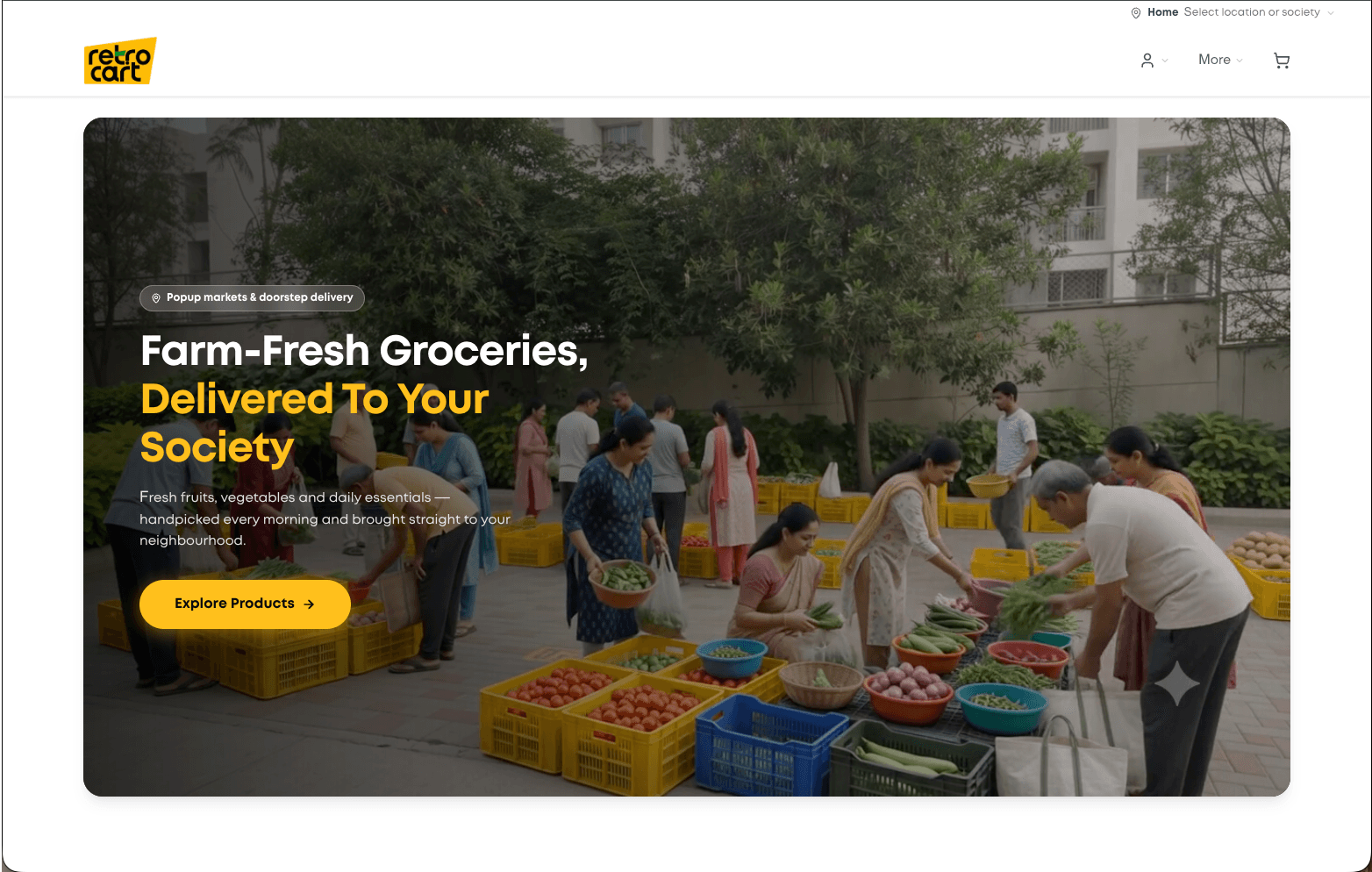
Retail Operations & Fresh Produce
Retrocart & Trybix
The full operations platform for 56 fresh-produce markets in Bengaluru, then productised for other retailers.
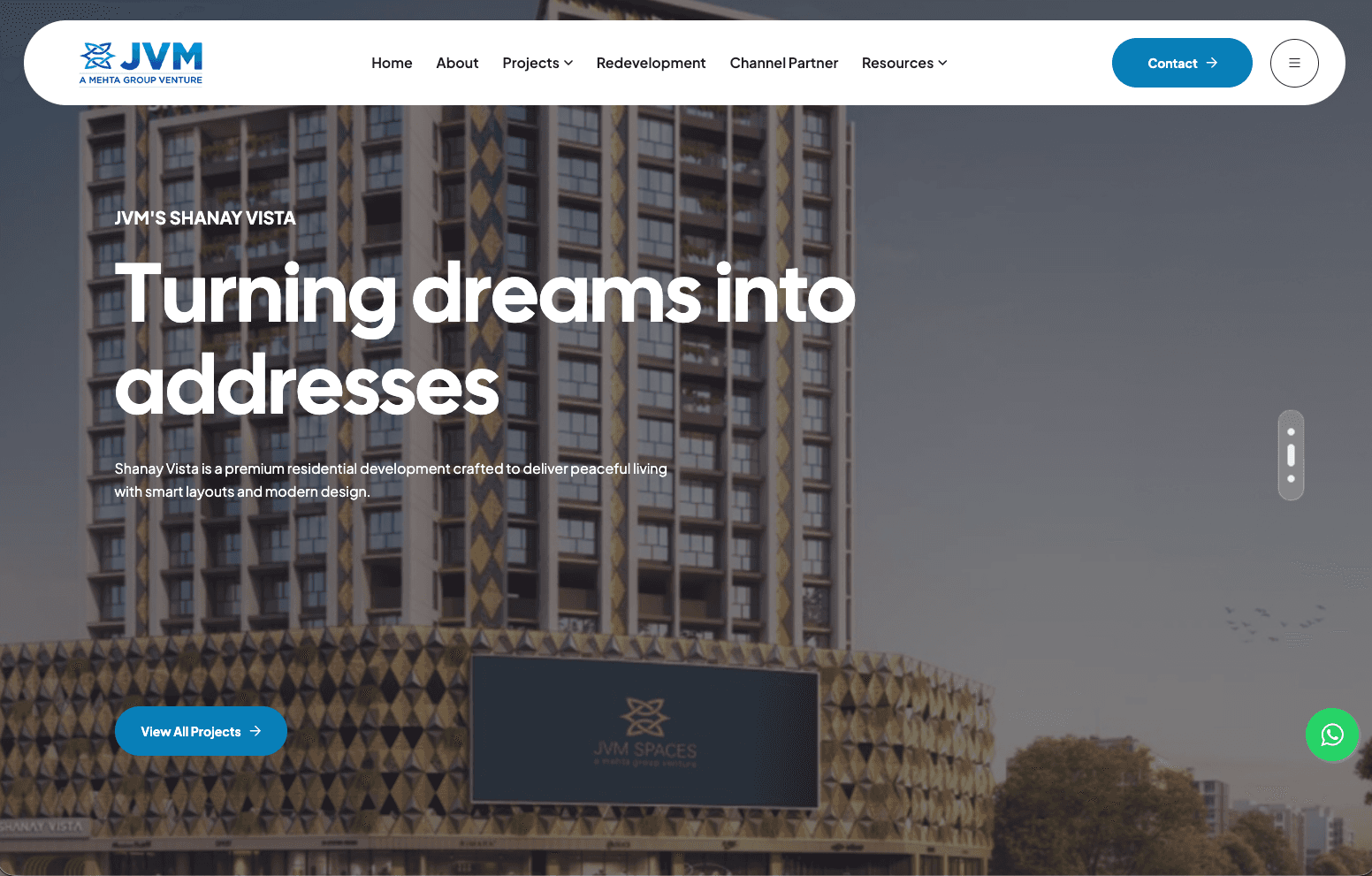
Real Estate & Construction
JVM Spaces
Unit allocation, payment schedules, generated letters and a customer portal for a residential developer.
Client project
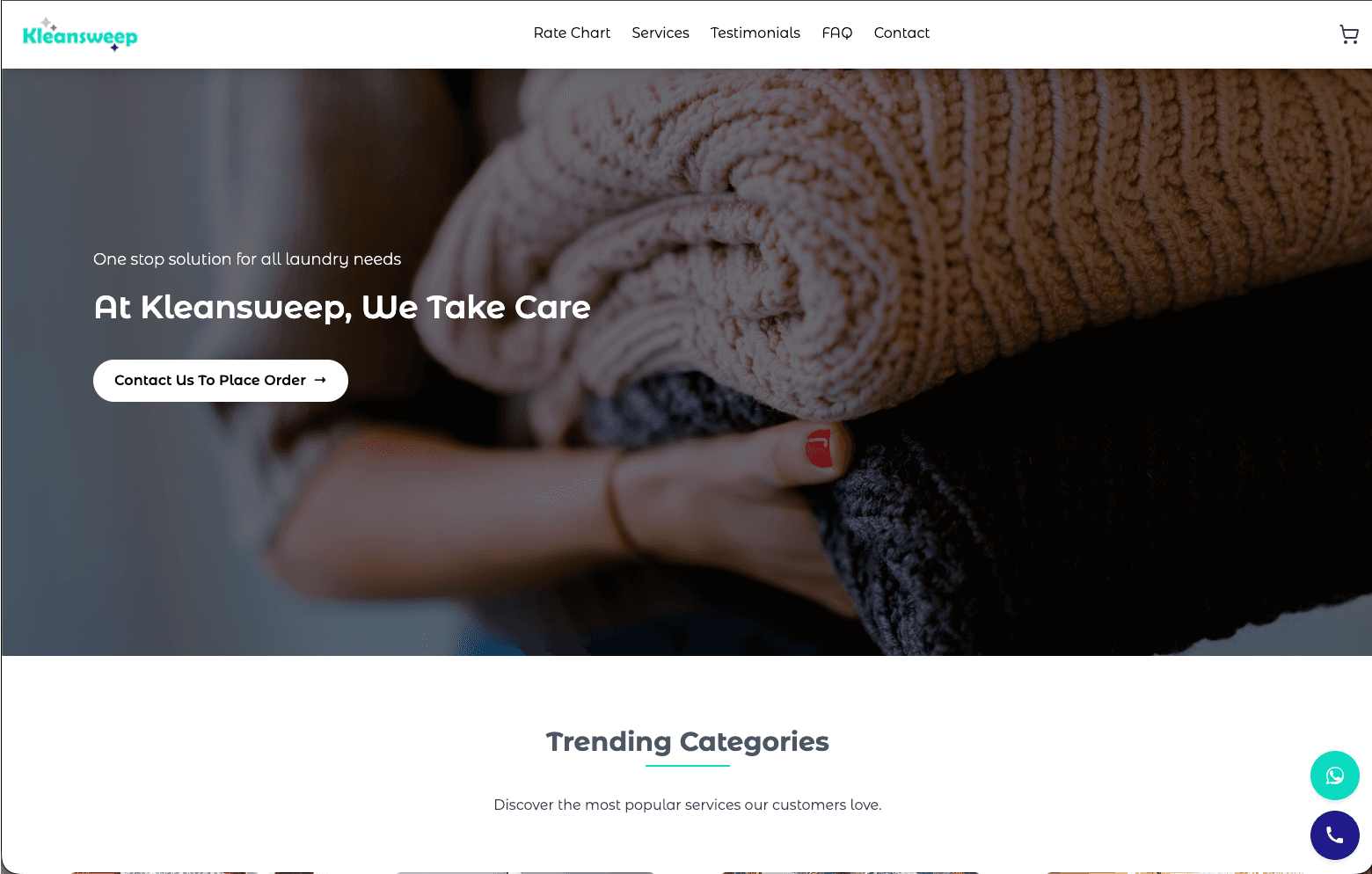
Laundry & Cleaning Services
Kleansweep
Seventy-one models covering orders, production, logistics, procurement, payroll and customer wallets.
Questions people ask us
Straight answers
How much does it cost to develop custom software?
It depends on how many types of users there are, how many workflows the software handles, and what it must connect to (payments, WhatsApp, marketplaces, accounting). A small internal tool and a multi-team platform are very different budgets. A short call is the fastest way to get an honest range for your case.
Can I create my own software?
For simple tools, yes: no-code tools and AI assistants make it possible. It gets hard when the software holds customer or money data, needs several users with different permissions, or has to keep running reliably. That is where a development team earns its fee.
Can AI create software?
AI writes code quickly and we use it every day. It still needs an engineer to decide the structure, check security, handle real data and fix what breaks. Software built only by AI tends to work in the demo and fail with real users.
How do I create my own CRM?
List the stages a customer goes through, the information you need at each stage, and who in your team touches it. Then choose: an off-the-shelf CRM configured to those stages, or a custom one if your process is unusual. We built TRET because builders' processes did not fit generic CRMs.
Is CRM cloud-based?
Most modern CRMs are cloud-based, which means your team can use them from any device and you do not run your own server. Some businesses with strict data rules host their CRM privately.
What is the best software for a small business?
The one your team will actually use every day. Start with the job that is costing you the most (missed leads, billing, stock), fix that first, then connect the rest.
Still have a question? Ask us on a 15-minute call.
Keep reading
Where to go next.
Agentic AI for business
AI that takes steps to finish a task, not just answer.
ReadBusiness automation
Small, reliable automations for the jobs your team repeats.
ReadWhat is an admin panel?
How your team runs the business side without touching code.
ReadTRET, our real estate CRM
A CRM we built because builders did not fit generic tools.
ReadStart a conversation
Tell us what you’re building.
A real conversation about your business and whether we’re the right team to help. Free, and no obligation either way.
Reach us directly
- Call
- +91 859-141-8661
- Studio
- Thane, Mumbai Metropolitan Region
- Response time
- Within a few hours, working days