
Case study
Retrocart & Trybix
From one retailer's operating system to a product.
The full operations platform for 56 fresh-produce markets in Bengaluru, then productised for other retailers.

The challenge
What they needed.
Retrocart runs 56 morning markets across Bengaluru selling fresh fruit and vegetables. It is a business of thin margins and physical reality: produce is bought from sellers, moved by transporters, weighed at a counter, sold by the kilo, returned unsold, and reconciled against cash that physically travels back at the end of the day. At that scale the gaps compound. What was ordered against what arrived. What was weighed against what was billed. What went out against what came back. Every gap is money, and none of it is visible until somebody counts, by which point the produce is gone.
Our approach
What we did.
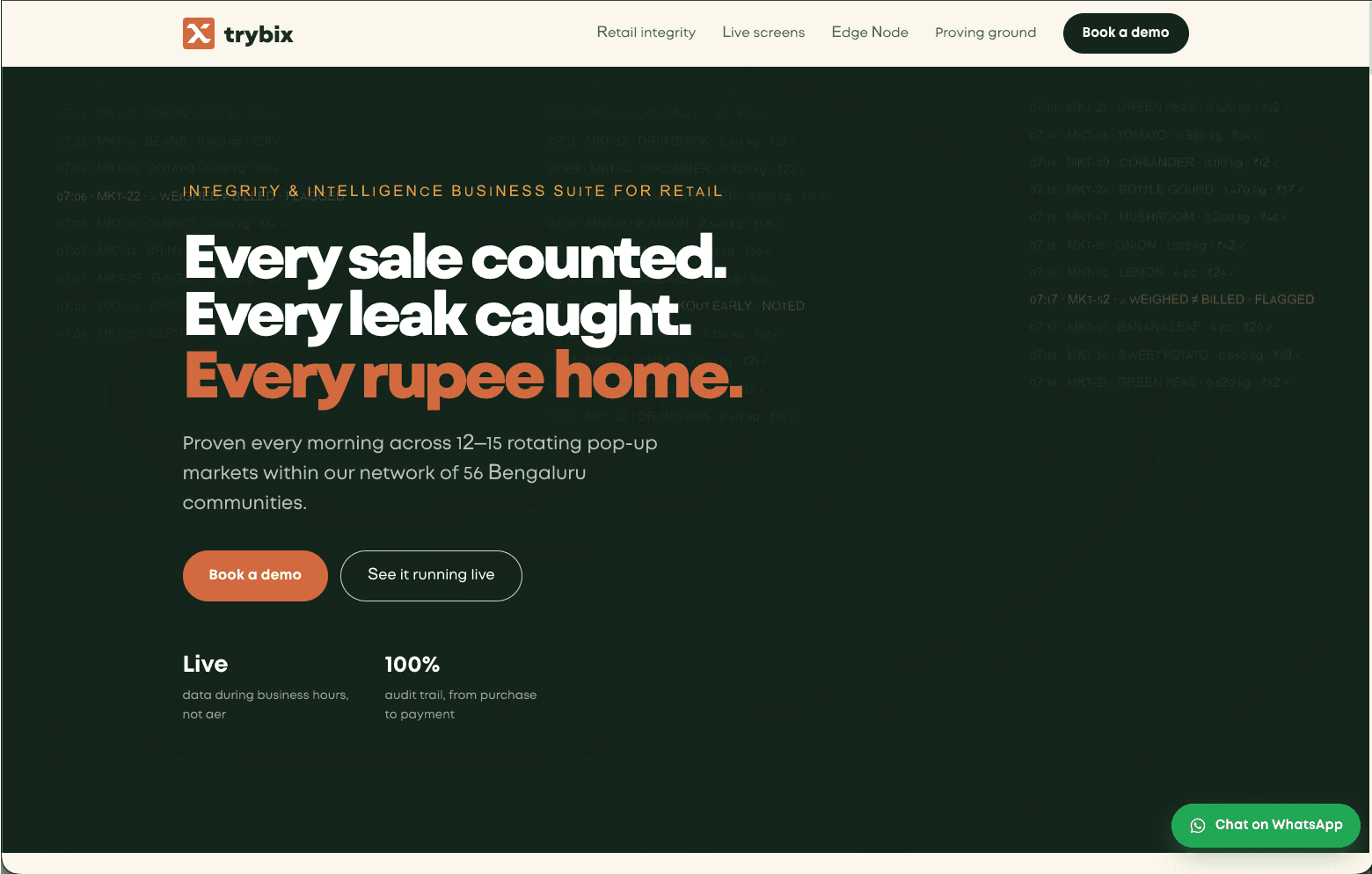
We built one system for the entire chain rather than integrating several, around a hard constraint: counter staff would not change how they work. They type an item code, weigh, and print a bill, exactly as before. An edge node connects to the existing WiFi-enabled weighing scales and captures each sale at the moment of weight, storing locally and syncing when connectivity returns, because market connectivity cannot be relied on. The intelligence sits in a layer above the data rather than in the counter workflow. What works for Retrocart works for any fresh-produce retailer with the same problem, so we helped productise it as Trybix, with Retrocart as the proving ground and first client.
What we built
Everything that shipped.
- Point of sale with dedicated invoice sequencing, weighing scale integration and offline-tolerant edge capture
- Sales variance at line item level, comparing what should have sold against what did
- Store day closure and shrinkage measurement
- Procurement: purchase orders, goods received notes, debit notes, return to vendor, indents and smart indents
- Quality control on inbound produce, including a formal four-point check
- Full seller onboarding: business and bank details, documents, agreements, logistics profile and addresses
- Seller ledgers and payment-to-GRN reconciliation
- Inventory with batches, snapshots, scheduled stock checks, reservations, inter-store transfers, crates and dump entries for wastage
- Dispatch, transporters, transport bills with reconciliation, internal vehicles and a fuel expense ledger
- Finance: expense hierarchies, vendor invoices, product cost tracking, cash bags for reconciling physical cash, and profit and loss by category
- People: salary structures, monthly salary sheets, payslips, shifts, attendance and leave
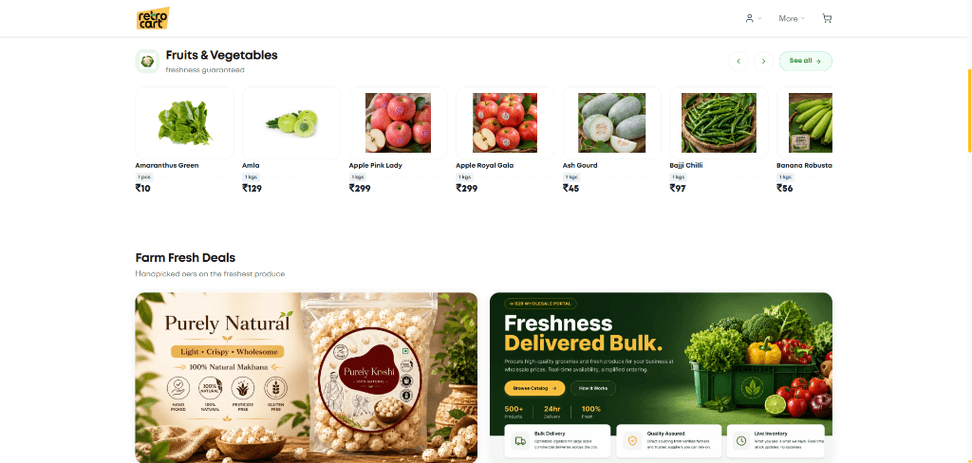
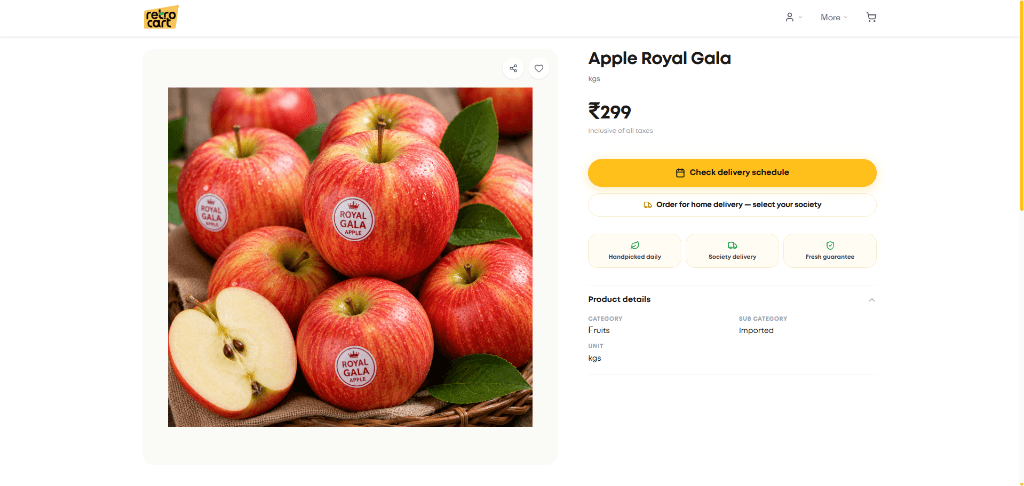
- Customer-facing commerce: societies with serving days, subscriptions, meal baskets, pop-up market orders, coupons and reviews
- Trybix Edge Node, the hardware that makes it work without retraining anyone
Inside the build
See it in action.
Outcomes
The results.
56 in Bengaluru
Markets live
318 of 384 since April
Features shipped
Measurable at 1.9%
Shrinkage
0.7 days
Average close time
Services used
Related reading
The 8 Automations Every Small Team Should Have Running by Now
If your team is still doing these eight things manually, you're losing hours every week that could be recovered in an afternoon. Here's exactly what to build and how.
Read ProductWhat Is an Admin Panel? Meaning, Features and Cost
An admin panel is the private back-office screen your team runs the business on. What belongs in one, the features that matter, and what it costs to build.
ReadStart a conversation
Tell us what you’re building.
A real conversation about your business and whether we’re the right team to help. Free, and no obligation either way.
Reach us directly
- Call
- +91 859-141-8661
- Studio
- Mumbai, India
- Response time
- Within a few hours, working days