
Case study
Restful Baby Sleep
Sleep tracking, a story library, and AI that does the admin.
Three products for a parenting business, including an AI panel that fills an entire story record from an uploaded manuscript.
The challenge
What they needed.
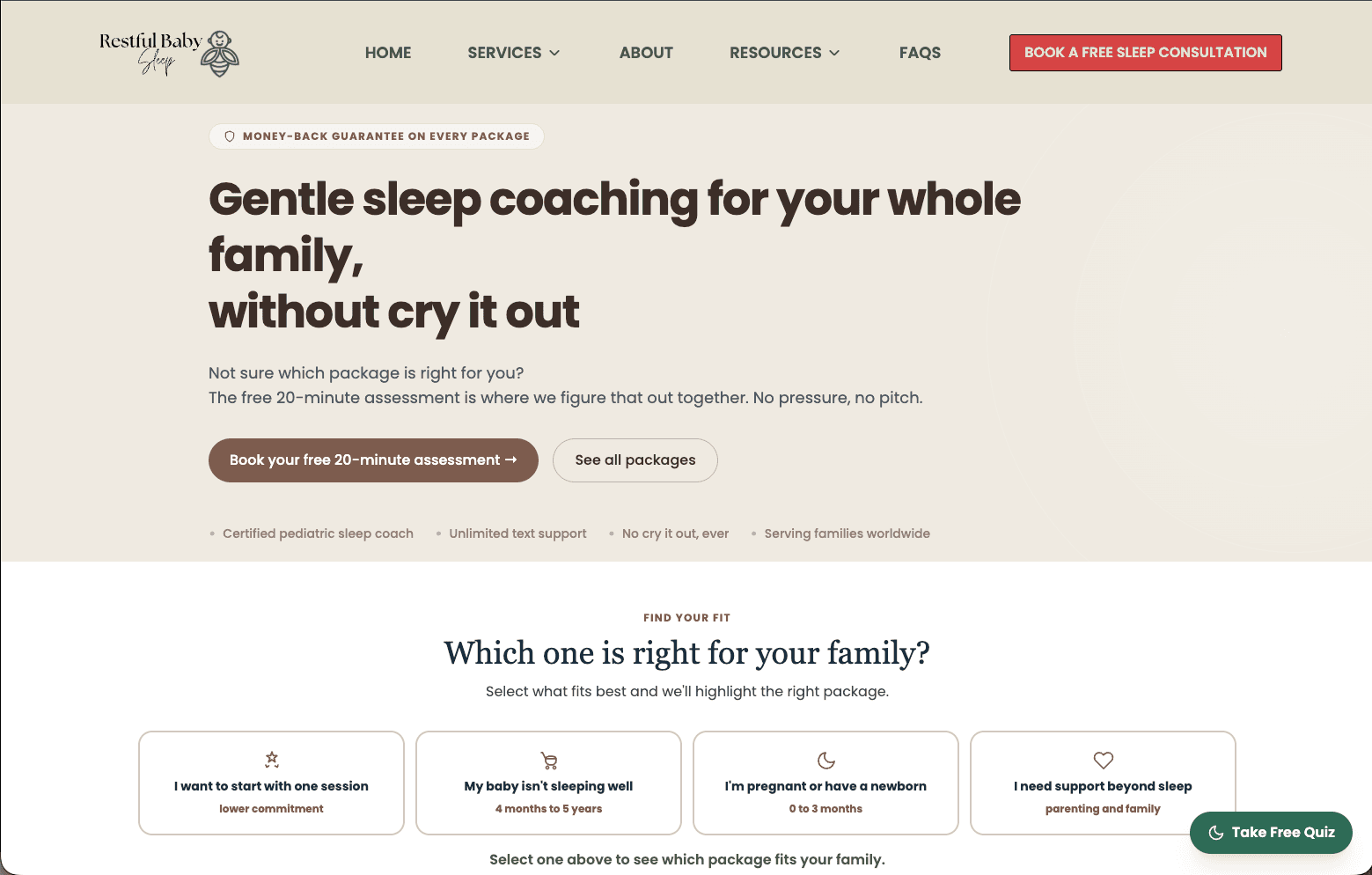
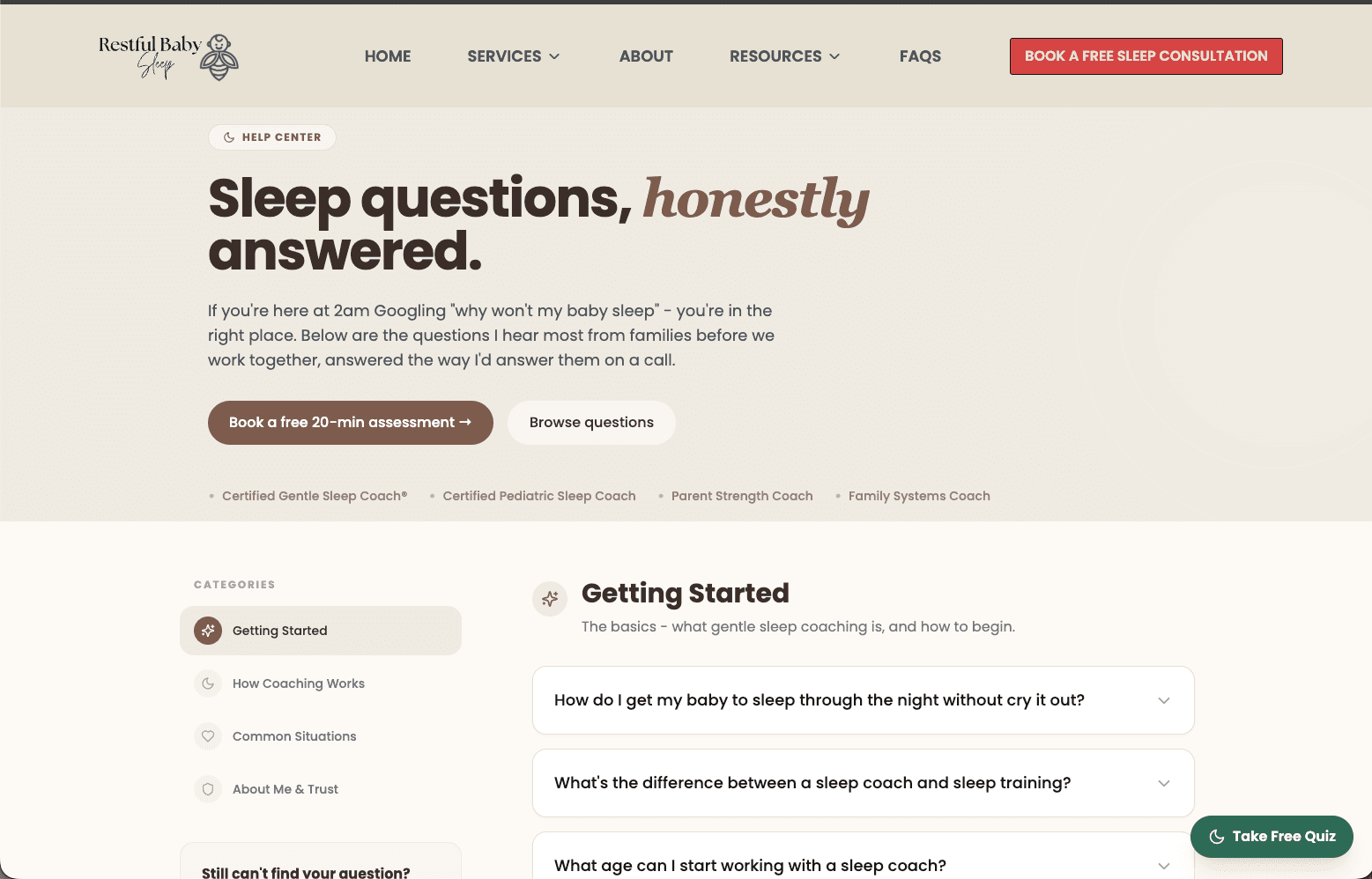
Restful Baby Sleep came to us with no digital presence at all: no website, no structured way to receive enquiries, and no clarity on which tools to run the business on. What began as a website engagement became three products, because the real problems were further in. Parents needed to track sleep against age-appropriate schedules. The business needed a library of children's stories that could be published and scheduled. And publishing each story meant a person filling in a long form of metadata, over and over, a name, a subtext, a description, a connection question, SEO fields, an age band and more, for every single story. That form was the quiet tax on the whole content operation: the more the library grew, the more human hours it took to keep growing, and the founder stayed stuck in the loop.
Our approach
What we did.
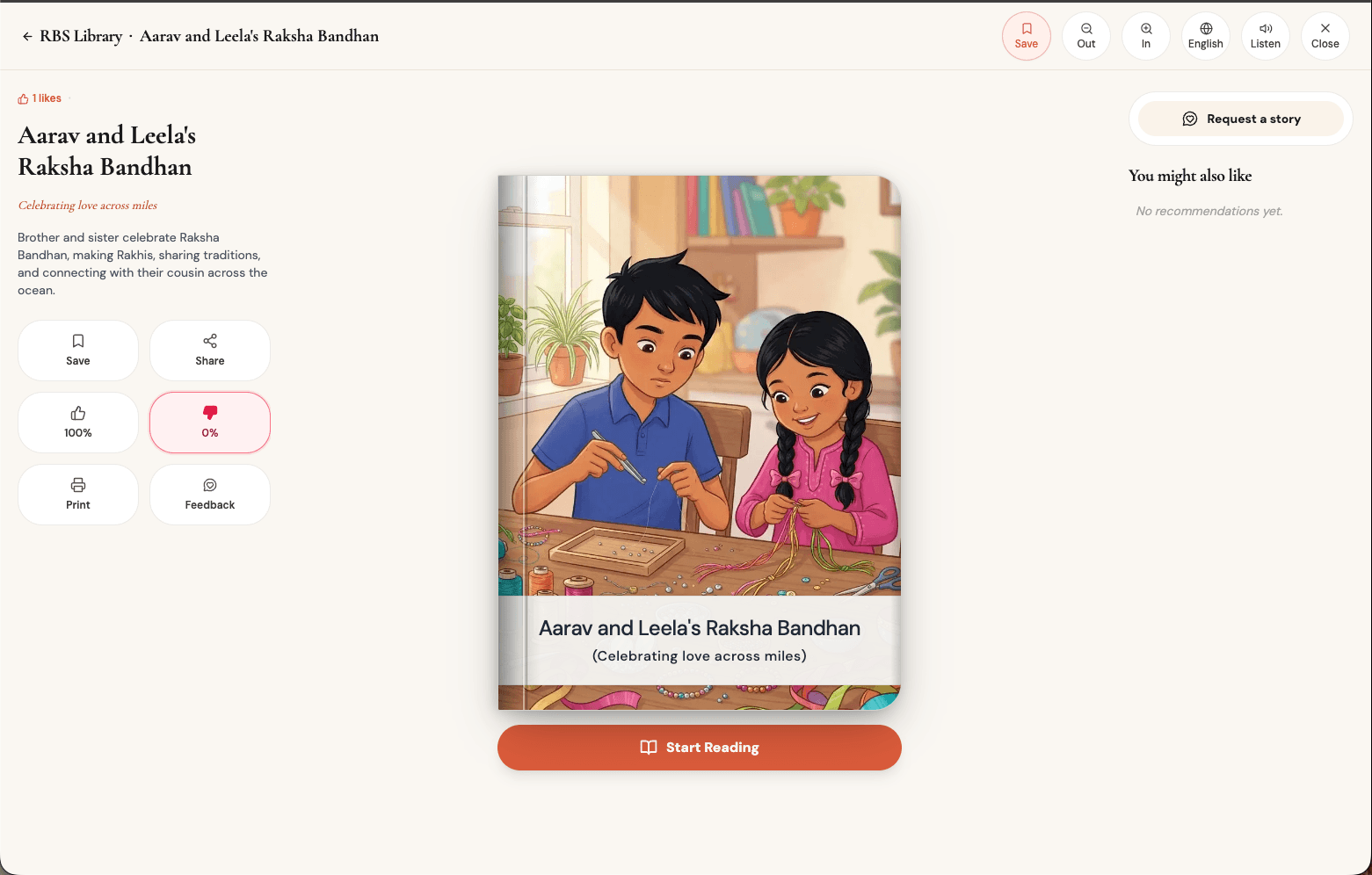
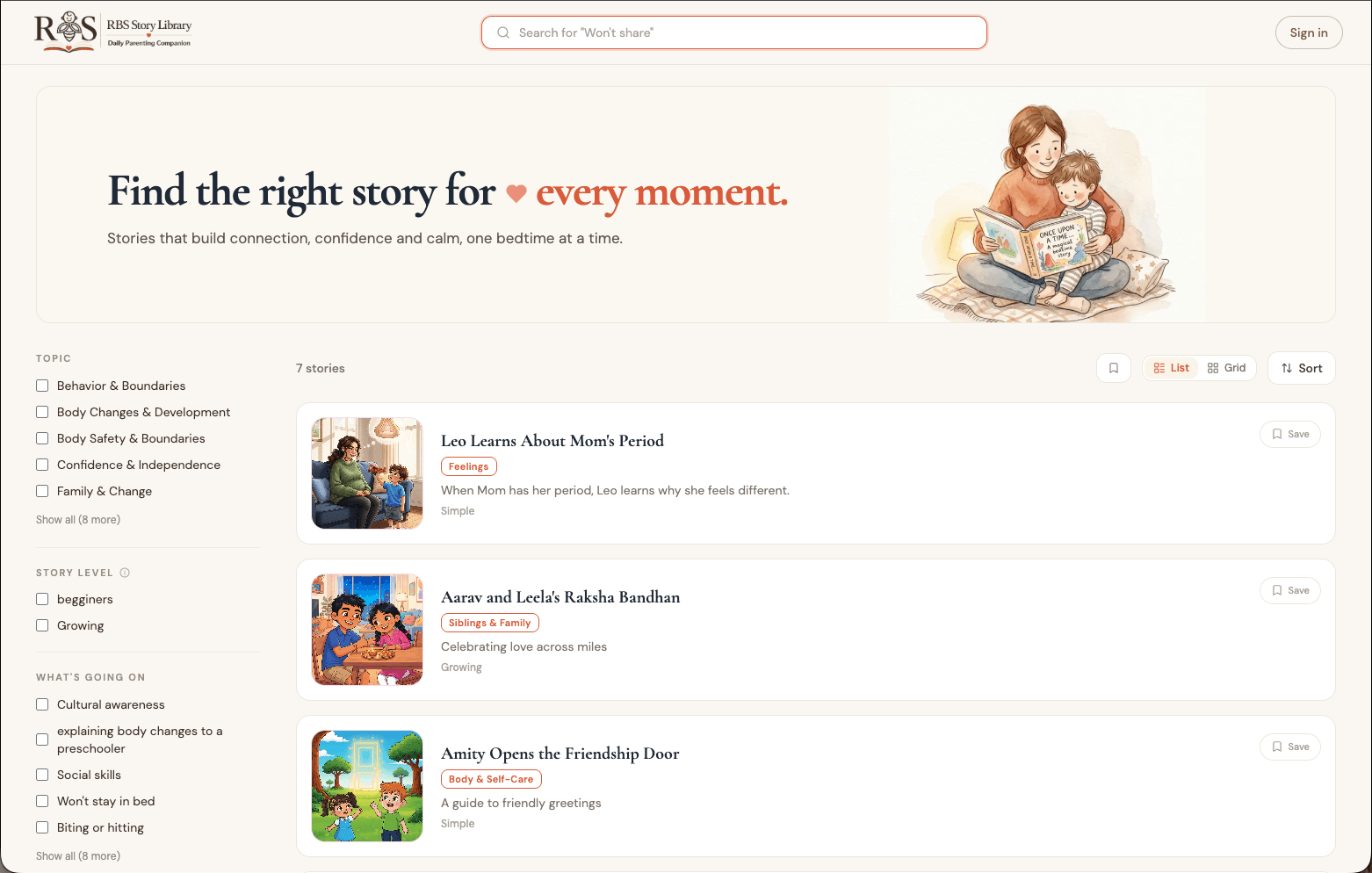
We started with brand alignment and a website, then built outward as the operational problems surfaced. The site ships with semantic markup, Open Graph, a sitemap and sub-two-second loads, and a CMS covers blog, tags, FAQs, collections, testimonials and homepage content. The sleep side is a tracker with profiles, sessions and day logs, backed by age-based schedules that define naps, wake windows and goal limits per age band and are assigned per user. The story library models books with pages, annotations, keywords, tags, topics and categories, with scheduled publishing, email delivery, gift codes and per-user read status. The third phase is the one worth talking about: rather than making the story publishing form faster, we removed most of it. The client uploads a manuscript and the panel fills itself, running on Groq, generating the name, subtext, description, connection question, SEO title and description, words to use, story level and age band. Every AI field is constrained to its real character limit rather than trusting the model, option resolution is lenient because models never reproduce a dropdown string byte for byte, and each field can be regenerated on its own so disliking one description does not mean redoing the record. They came back to us twice after the first engagement, which is the part of this story we are proudest of.
What publishing a story looks like now
Before, every story meant filling a long metadata form by hand. Now the client uploads a manuscript, the panel fills the name, subtext, description, connection question, SEO fields, story level and age band, and a person reviews what came back. If one field is not right, that field alone can be regenerated, and the rest of the record stays as it is.
Character limits are enforced by the system rather than left to the model, so nothing arrives too long for the page it is going on. The founder's job shifts from typing to checking, which is the part that actually needs a human.
What we built
Everything that shipped.
- Website with semantic markup, Open Graph, sitemap and sub-two-second load times
- CMS covering blog, tags, FAQs, collections, testimonials and homepage content
- Sleep tracker with profiles, sessions and day logs
- Age-based schedules defining naps, wake windows and goal limits per age band, assigned per user
- Story library: books with pages, annotations, keywords, tags, topics, categories and relations
- Scheduled story publishing with email delivery, plus gift codes and per-user read status
- AI autofill on Groq: upload a manuscript and get name, subtext, description, connection question, SEO title and description, words to use, story level and age band
- Every AI field constrained to its real character limit rather than trusting the model
- Lenient option resolution, because models never reproduce a dropdown string byte for byte
- Per-field regeneration, so disliking one description does not mean redoing the record
- Funnel: questionnaires with an answer bank, packages, paid clients, receipts and mailer leads
Stack
What it was built with.
- Ruby on Rails
- Next.js
- Groq
- PostgreSQL
- AWS EC2
- AWS Amplify
Inside the build
See it in action.
Outcomes
The results.
3
Products delivered
Long form to upload and review
Story publishing
No developer in the content loop
Client independence
Services used
Related reading
The AI Tools Founders Actually Use (And the Ones That Are Just Hype)
Every founder is being sold AI tools right now. Most aren't worth your time. Here's what actually moves the needle, and how to build a stack that works.
Read ProductWhat is an admin panel?
An admin panel is the private back office of a website or app where your team manages orders, users and content. Here is what it does, with real examples.
ReadStart a conversation
Tell us what you’re building.
A real conversation about your business and whether we’re the right team to help. Free, and no obligation either way.
Reach us directly
- Call
- +91 859-141-8661
- Studio
- Thane, Mumbai Metropolitan Region
- Response time
- Within a few hours, working days