
Case study
ShivKrupa Group
Camera-based vehicle trip logging for excavation sites.
Gate cameras detect vehicles, supervisors confirm the load, and every trip becomes an auditable record.
The challenge
What they needed.
Large excavation sites move hundreds of vehicle loads a day, and every one of those trips is money: material leaving site, material arriving, vendors billing against volume nobody independently counted. ShivKrupa Group needed a record of what actually moved, produced without stationing someone at every gate with a clipboard, and trustworthy enough to reconcile vendor bills against. The tension is real: a fully manual log depends on a person being present and honest at every gate, every shift, and quietly rots the moment attention slips, while a fully automatic system produces numbers that look precise but that nobody on the finance side is willing to stake a vendor payment on. Sites also run multiple gates and multiple companies, so whatever was built had to hold up across all of them rather than for a single camera at a single entrance.
Our approach
What we did.
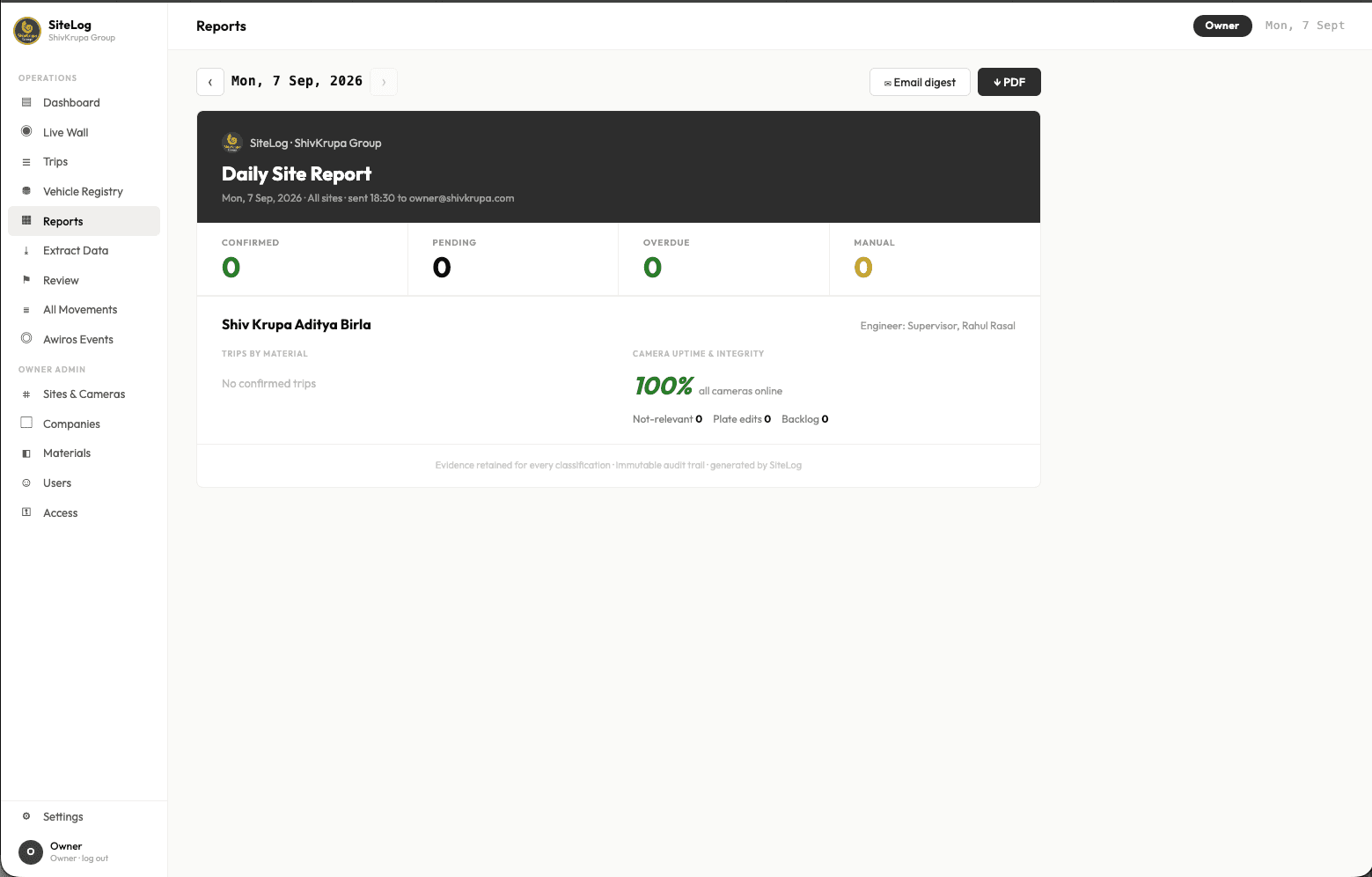
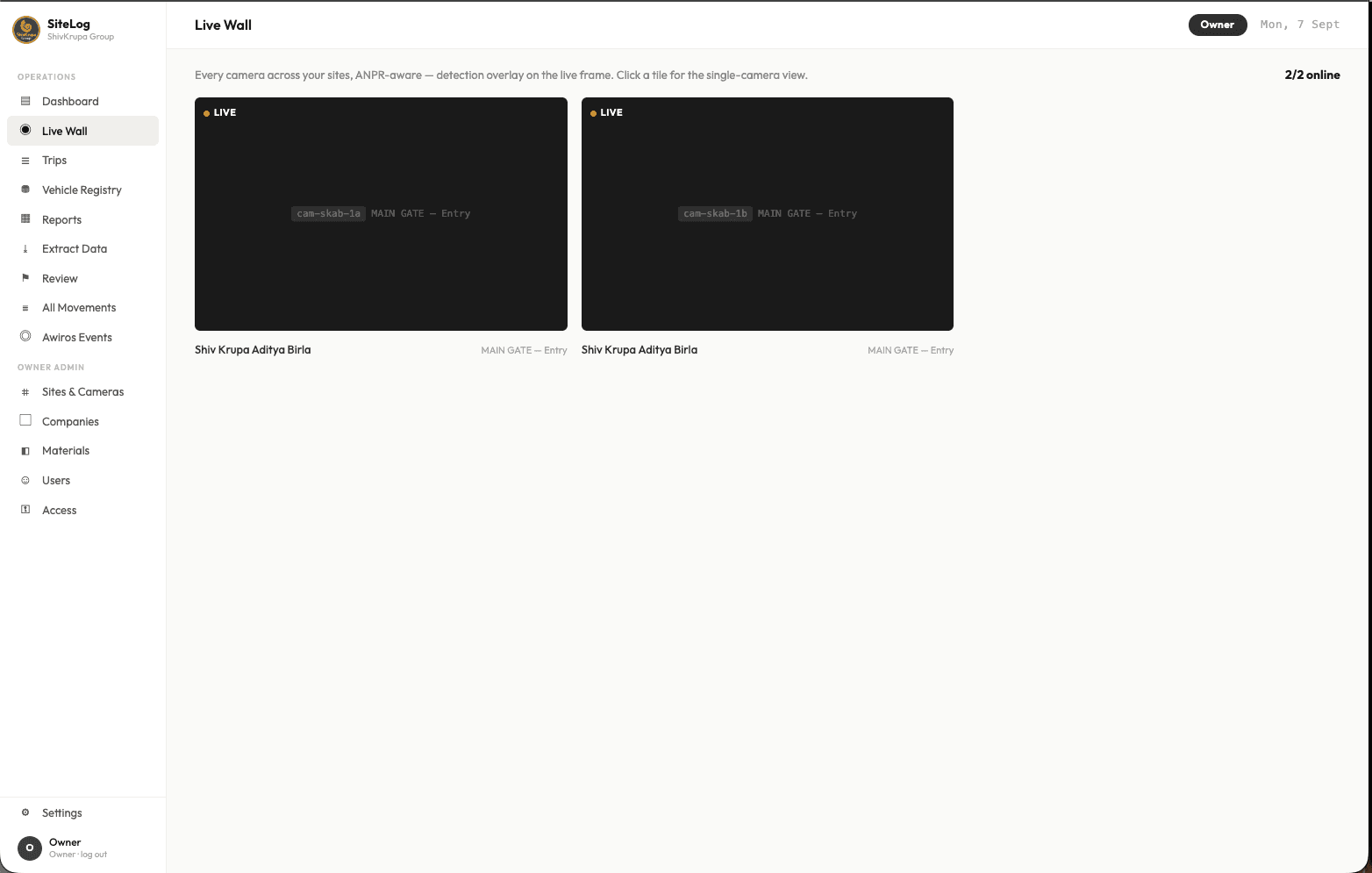
We designed around the camera rather than around the form. Gate cameras detect vehicles automatically through number plate recognition, receiving detection events from the vision layer. A supervisor then confirms what the vehicle is carrying, which is the one judgement a camera cannot make reliably. Confirmed detections become trip records. That split is the whole design: fully automatic systems produce data nobody trusts, fully manual systems produce data nobody enters, and automatic detection with a human confirmation step produces records that are both complete and defensible. Gates and cameras are modelled per site, so multi-gate and multi-company sites are handled natively, and every detection lands first as a movement record in a supervisor review queue before it is confirmed into a trip with its material recorded. The platform is built API-only on Rails with JWT authentication, granular permissions per role and per site, and vendor credentials and vendor tokens for third-party access, so a vendor can be given a scoped view without being handed the whole system. A full audit log records every change, which is what lets a confirmed trip stand as evidence when a vendor bill is questioned.
A trip, from gate to record
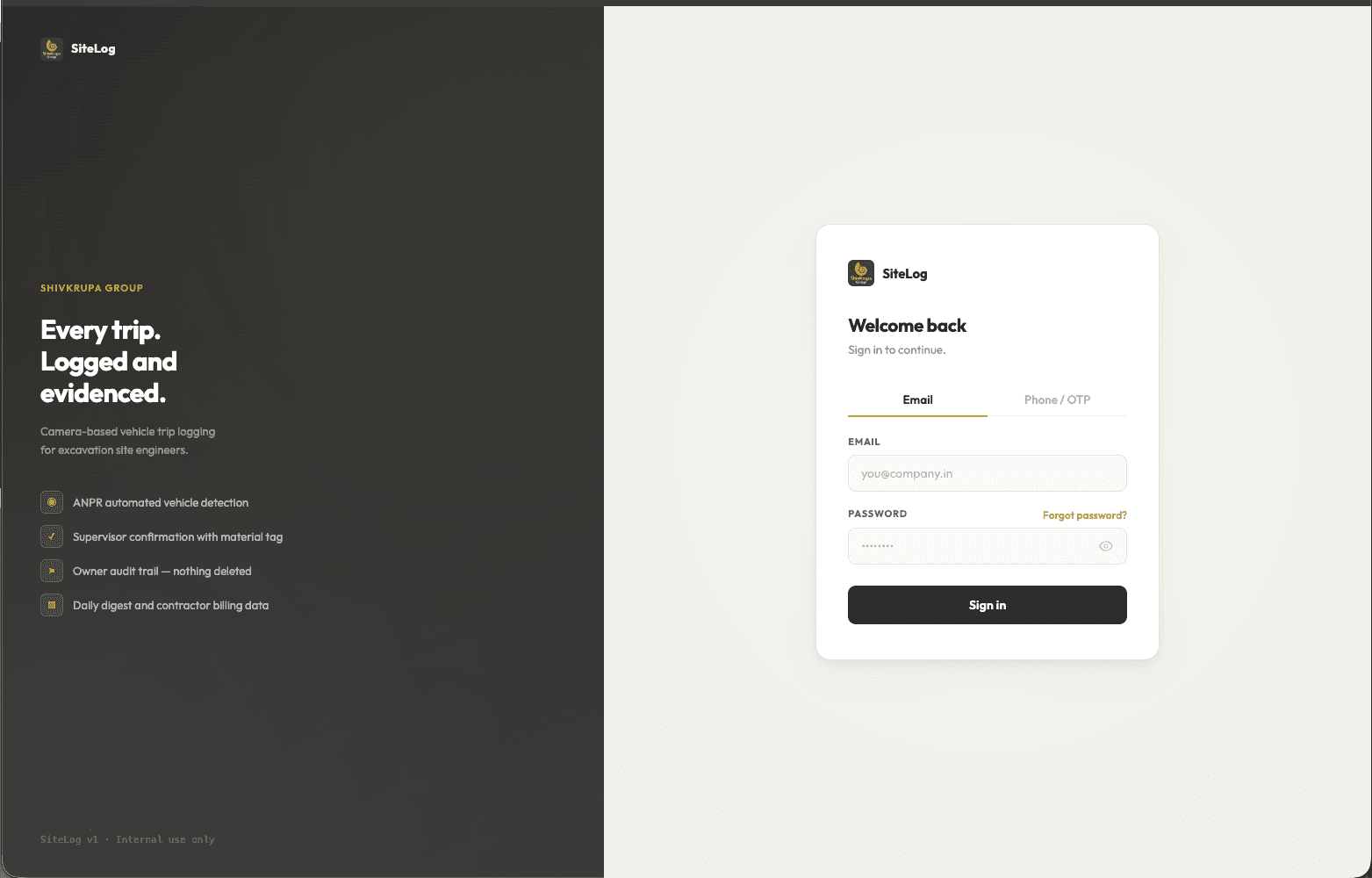
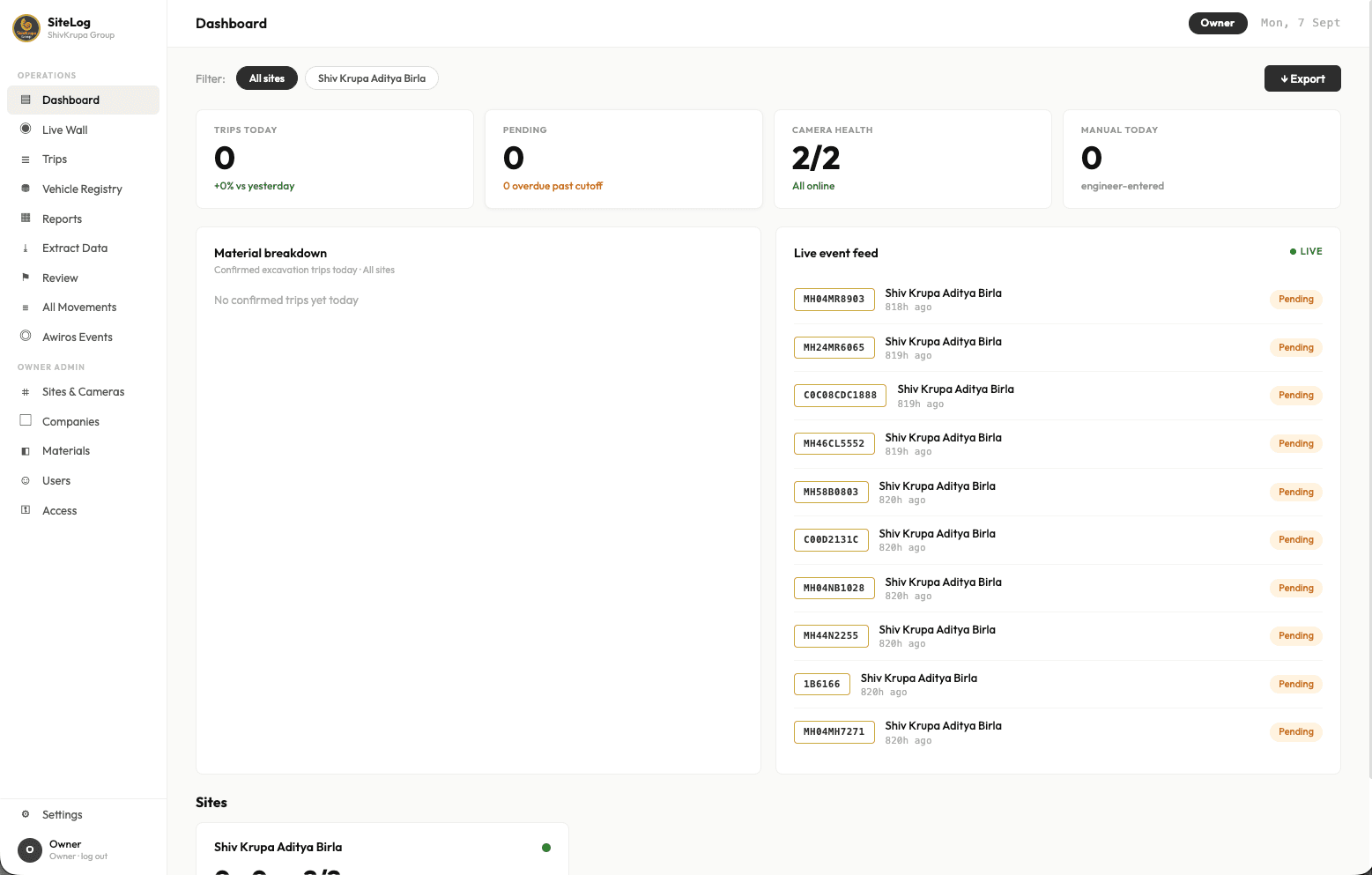
A vehicle reaches the gate. The camera reads its number plate and sends a detection event, which becomes a movement record. That record waits in the supervisor review queue until a supervisor confirms what the vehicle is carrying. Once confirmed, it becomes a trip record with the material attached, and the audit log keeps every change made along the way.
The supervisor is asked for one thing only, the load type, which is the judgement a camera cannot make reliably. Everything else is captured automatically.
Why vendors get their own access
Vendor bills are where trip records earn their keep. Vendor credentials and vendor tokens let a vendor see a scoped view of the data that concerns them, without being given the whole system. When a bill is questioned, both sides can look at the same confirmed trips, backed by the same change log.
Because the platform is API-only, with granular permissions per role and per site, the same records can serve a supervisor at one gate, a finance team reconciling across sites and a vendor checking its own trips, each seeing only what they should.
What we built
Everything that shipped.
- Camera integration with automatic number plate recognition, receiving detection events from the vision layer
- Gates and cameras modelled per site, so multi-gate sites are handled natively
- Movement records capturing every detection
- Supervisor review queue of detections awaiting confirmation
- Confirmed movements become trip records, with the material recorded
- Multi-site and multi-company structure, with vehicles and materials
- Granular permissions per role and per site
- Vendor credentials and vendor tokens for third-party access
- Full audit log of every change
Stack
What it was built with.
- Ruby on Rails 8.1
- API-only mode
- PostgreSQL
- JWT authentication
- bcrypt
- Computer vision event integration
Inside the build
See it in action.
Outcomes
The results.
Automatic, at the gate
Detection
Human, on load type only
Confirmation
Auditable, with a change log
Every trip
Services used
Related reading
What is an admin panel?
An admin panel is the private back office of a website or app where your team manages orders, users and content. Here is what it does, with real examples.
Read AutomationThe 8 Automations Every Small Team Should Have Running by Now
If your team is still doing these eight things manually, you're losing hours every week that could be recovered in an afternoon. Here's exactly what to build and how.
ReadStart a conversation
Tell us what you’re building.
A real conversation about your business and whether we’re the right team to help. Free, and no obligation either way.
Reach us directly
- Call
- +91 859-141-8661
- Studio
- Thane, Mumbai Metropolitan Region
- Response time
- Within a few hours, working days