
Case study
Wavryn Active
One catalogue, merchandised three ways at once.
A women's athleisure store sorted by garment, activity and colour, a shared content engine, and two Apps Script automations replacing paid apps.
The challenge
What they needed.
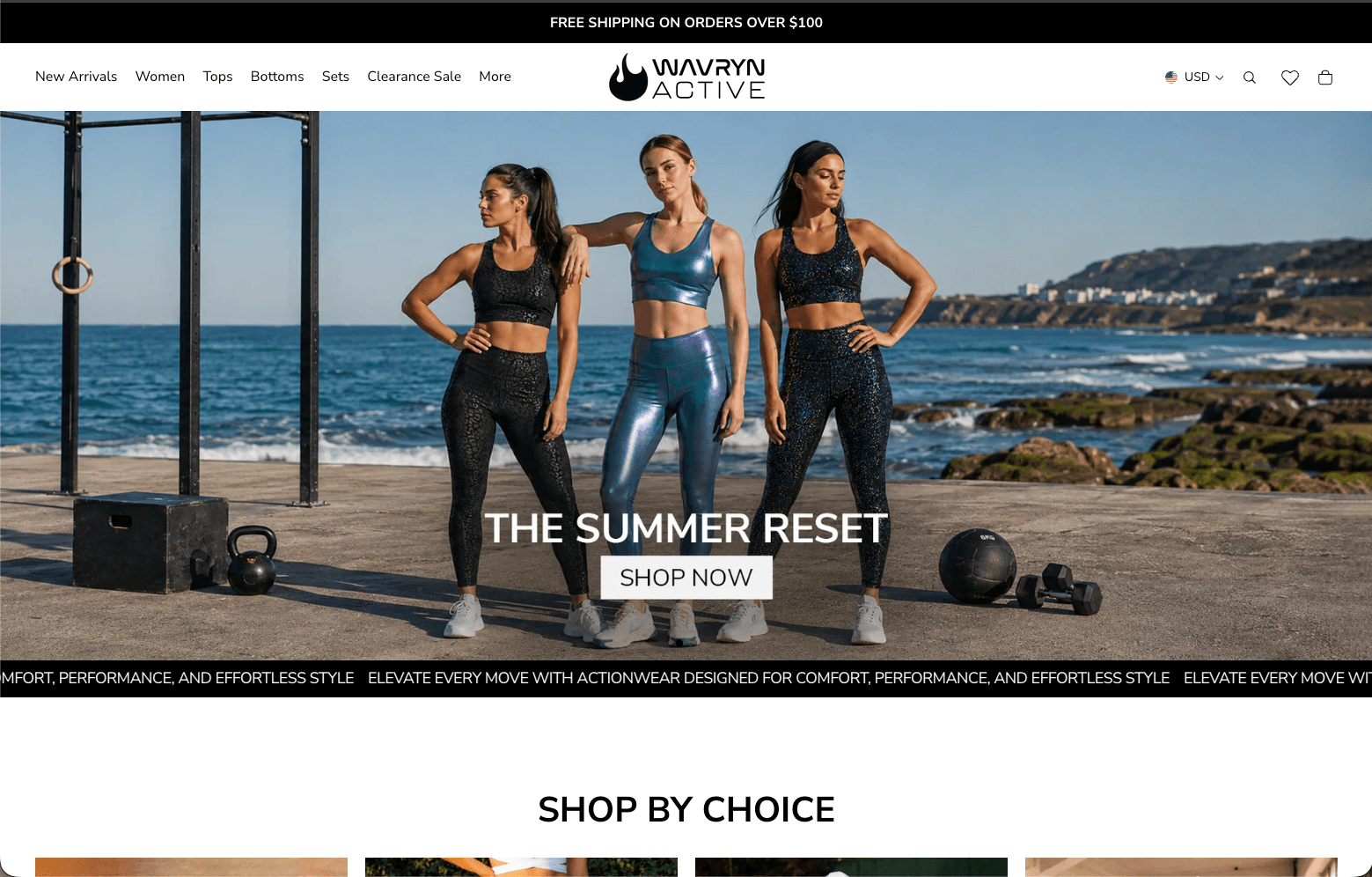
Wavryn Active is women's athleisure, and athleisure shoppers arrive knowing different things. One wants a garment type, one wants clothing for a specific activity, one is shopping a colour or print. A store that sorts only one way loses the other two intents. On top of the storefront, the brand needed two things Shopify does not give you out of the box: order data somewhere the team can actually work with it, and a warning before a size sells out, both of which the app store answers at a monthly fee per app. For a young brand those subscriptions add up quietly and never stop, and each one is another login and another vendor in the stack. The brand wanted the operational basics covered without taking on recurring cost for what are, underneath, two small automations.
Our approach
What we did.
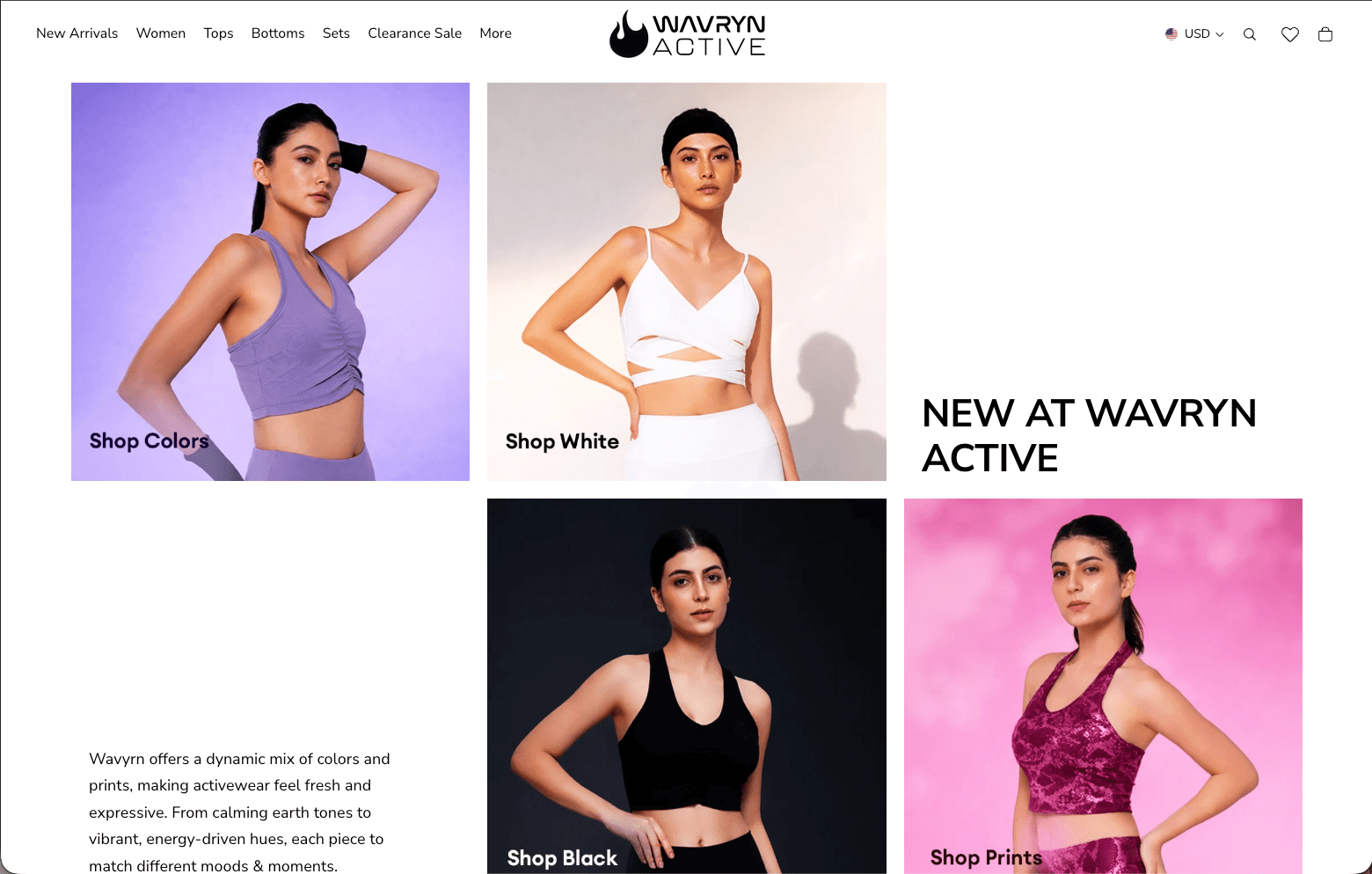
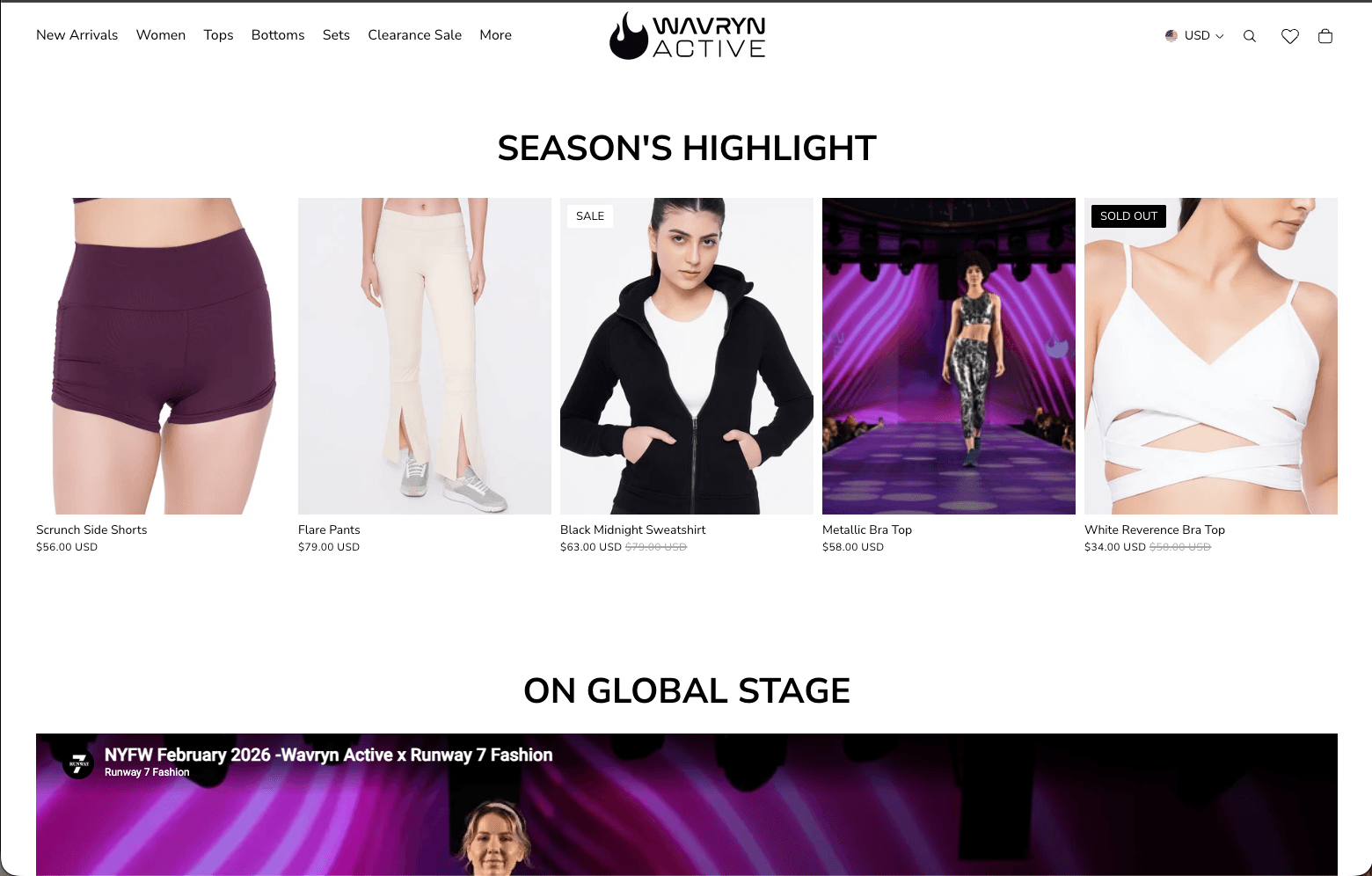
We merchandised the catalogue along three axes at once, so a customer can browse by garment type, by activity, or by colour and print and land in the same products from any direction, with activity navigation across Yoga and Pilates, Dance and Studio, Gym and Training, and Running and Cardio, plus an NYFW collection, a clearance section and an ambassador program. For operations, two automations on Google Apps Script triggers instead of two paid apps: new and updated Shopify orders land in a Google Sheet every ten minutes, and a Monday email summarises low stock in the body with the full inventory attached as CSV. No server, no deployment, no monthly cost, and a scoped Shopify custom app that requests only read_products, read_inventory and read_orders rather than broad access. Alongside it, an instance of the shared Akyra blog engine, now carrying sixteen posts, which is the brand's own organic-search channel sitting on the same infrastructure as its two sister brands. The three-way merchandising is the decision that holds the store together: because the same product is reachable by garment, by activity and by colour, a shopper who arrives with any one of those intents lands in the catalogue rather than bouncing, and the brand does not have to guess which way its customers prefer to shop.
What we built
Everything that shipped.
- Catalogue merchandised three ways at once: by garment type, by activity, and by colour and print
- Activity navigation across Yoga & Pilates, Dance & Studio, Gym & Training and Running & Cardio
- NYFW collection, a clearance section and an ambassador program
- Live Shopify order sync into Google Sheets on a ten-minute trigger
- Monday inventory email: low-stock summary in the body, full inventory CSV attached
- Runs on Google Apps Script with no server, no deployment and no monthly fee
- Scoped Shopify custom app requesting only read_products, read_inventory and read_orders
- Blog instance on the shared Akyra content engine, sixteen posts live
Stack
What it was built with.
- Shopify
- Google Apps Script
- Google Sheets
- Next.js
- Tailwind CSS
Inside the build
See it in action.
Outcomes
The results.
3
Merchandising axes
Every 10 minutes
Order sync
Zero
Monthly app cost
16
Posts published
Services used
Related reading
The 8 Automations Every Small Team Should Have Running by Now
If your team is still doing these eight things manually, you're losing hours every week that could be recovered in an afternoon. Here's exactly what to build and how.
Read TechShopify Store Cost in India (2026): Full Price Breakdown
Shopify store cost in India starts from Rs 25,000. The full 2026 price breakdown by tier and add-ons, plus the two things that really move the number.
ReadStart a conversation
Tell us what you’re building.
A real conversation about your business and whether we’re the right team to help. Free, and no obligation either way.
Reach us directly
- Call
- +91 859-141-8661
- Studio
- Thane, Mumbai Metropolitan Region
- Response time
- Within a few hours, working days